Emotional Alchemy Transforming Your Emotions

Some people have discovered great success by utilising a set of techniques known collectively as Emotional Alchemy. This pertains to the process of altering your emotions into different states. The concept can be likened to the alchemists’ objective of transforming ordinary metals into gold. Similarly, you possess the ability to transmute what may initially appear as negative emotions into higher ones, through the practice of awareness and understanding.

Starting the process of emotional alchemy requires embracing emotions without judgment or resistance. By ceasing to engage in a battle against your emotions, and instead becoming an observer with acceptance, you create room for transformation. When you acknowledge and validate your emotions, you honour your authentic self, your Life Force, thereby fostering an environment conducive to personal growth.

For an efficient restoration of emotional equilibrium, it is crucial to engage with your Life Force. Understanding emotions as a form of energy allows you to work with your Life Force for better comprehension and eventual transformation of those energies. By cultivating a harmonious connection with your Life Force, you can heighten emotional awareness and better regulate your reactions. Techniques such as meditation, yoga, qigong, and tai chi are structured to balance and enhance the flow of chi, establishing a solid foundation on which you can begin this transformative process.

♾ Awaken your Mind ♾
Sorry can be the Hardest Word

Do not be afraid to be the one to say sorry after an argument or disagreement, even if you think you are in the right. Being sorry is not about taking a proverbial side, winning or losing. It is an exploration into the realm of friendships and relationships which underscores the transformative power of humility, gratitude, and the acceptance that compromise should be seen as a cornerstone of harmonious connections.

In the heat of disagreements, the ego often stands tall, fuelling the belief that admitting fault or offering an apology is a sign of weakness. However, the opposite holds true. Apologising requires a deep well of strength and self-awareness, an acknowledgement that relationships are nuanced, and the pursuit of being right at the expense of connection is a hollow victory. Learning to say sorry becomes a bridge that spans the chasm created by disagreements, fostering understanding, and fortifying the foundation of trust.

The essence of compromise is a hard lesson to grasp, especially in a world that increasingly fosters individuality and the pursuit of personal desires. Yet, as you navigate the complex web of relationships, both personal and professional, hopefully, you may realise that compromise is not a surrender or loss. It is an acknowledgement that more often than not, we need to work together in life to achieve mutual understanding and shared happiness.

Gratitude becomes the natural offspring of the willingness to apologise and compromise. When you embrace the humility required to say sorry, it can help you to better appreciate the friendships and relationships around you. Gratitude allows you to shift the focus from what is lacking or perceived to be lost, to what is present or achieved. In the act of saying sorry, you can not only mend interpersonal bridges, but also cultivate a grateful heart that sees the richness of what already exists.

Realise that simply saying sorry can make such a difference, whether it is to defuse a situation or to make things right. So take the time to contemplate that being sorry is not so difficult to achieve.

♾ Awaken your Mind ♾

Take a Deep Breath

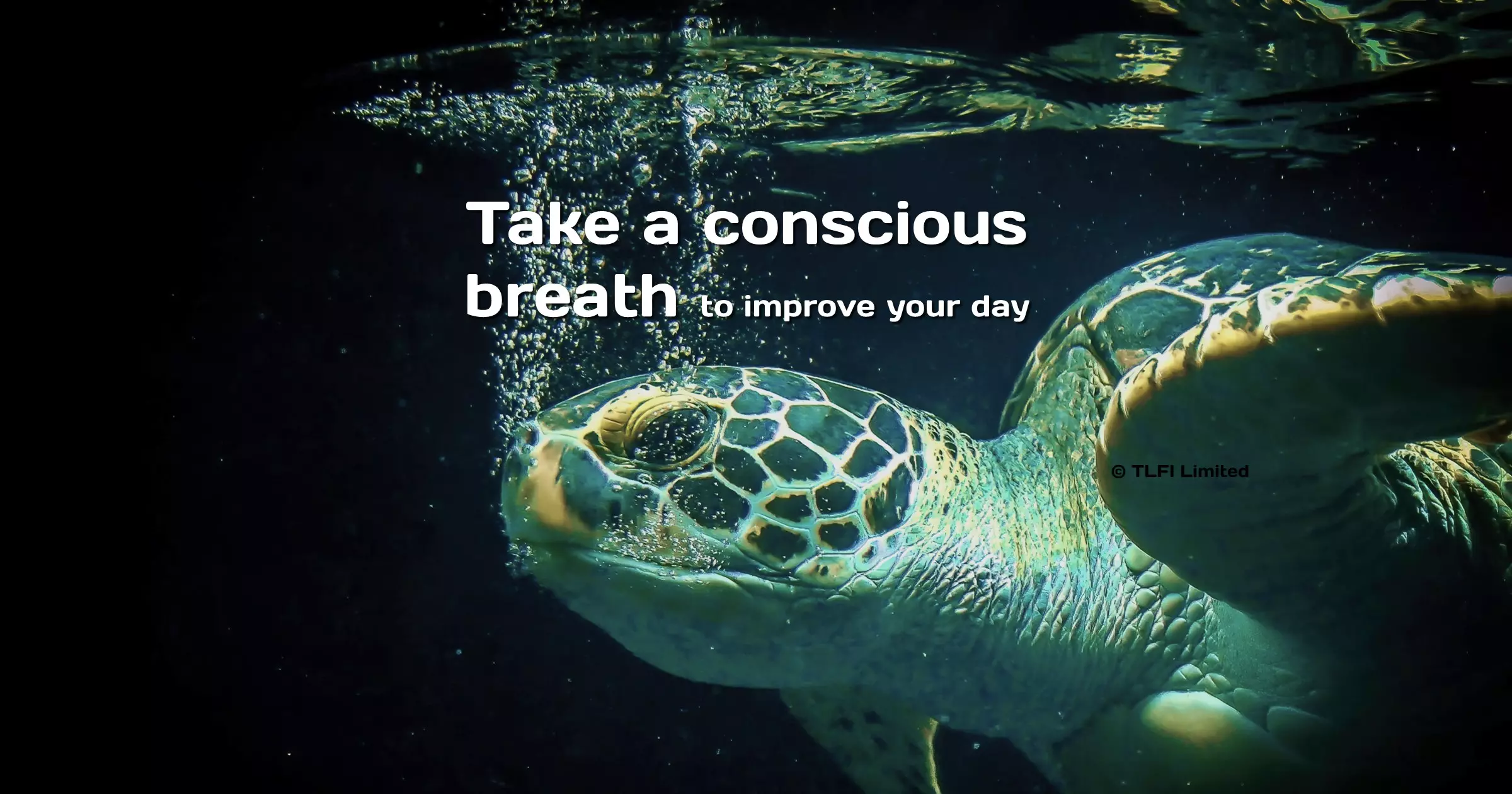
Sometimes in life, it can be important to stop to take a breath. Throughout your life, you constantly breathe, but much of this activity is controlled by the autonomic nervous system of the physical body and goes on unnoticed. The act of taking a breath is a conscious decision to step in and control your breathing. This can be extended to observe all sensations around your breath.

So how can consciously taking a breath be so helpful? Well, the first and most important aspect is that it provides a focus for your mind. If you have been having trouble with erratic thoughts or rampant emotions, focusing your mind in this way can be a simple but effective means to create a pause. When you have paused the mind and given it an alternative focus, you have the opportunity to step in and break the pattern of thoughts or emotions which are impacting your life, then make a conscious choice rather than continuing to react with the passive intellect.

You will also find that if you take a deep and purposeful breath, the act of your deep breathing activates your parasympathetic nervous system. This contrasts with the sympathetic nervous system’s activation, associated with the fight-or-flight response. By consciously engaging with deep breathing, you can access a powerful tool for self-regulation, steering away from the stress-inducing patterns of the modern world.

When approached with intention and mindfulness, your breathing becomes a means to achieve relaxation, infusing the mind with a calm clarity that is conducive to optimal cognitive function. Your brain is a large consumer of oxygen within your body – on the physical level it is then clear to see how conscious breathing opens channels for increased oxygen intake, leading to improved mental clarity.

Conscious breathing extends beyond the cognitive realm, reaching into the emotional and psychological domains. It becomes a tool for breaking free from the ruminations of the passive intellect, offering a pathway to emotional balance and mental resilience. Stopping to consciously take a breath. can be extremely beneficial for your well-being.

♾ Awaken your Mind ♾

Escaping Emotional Jail

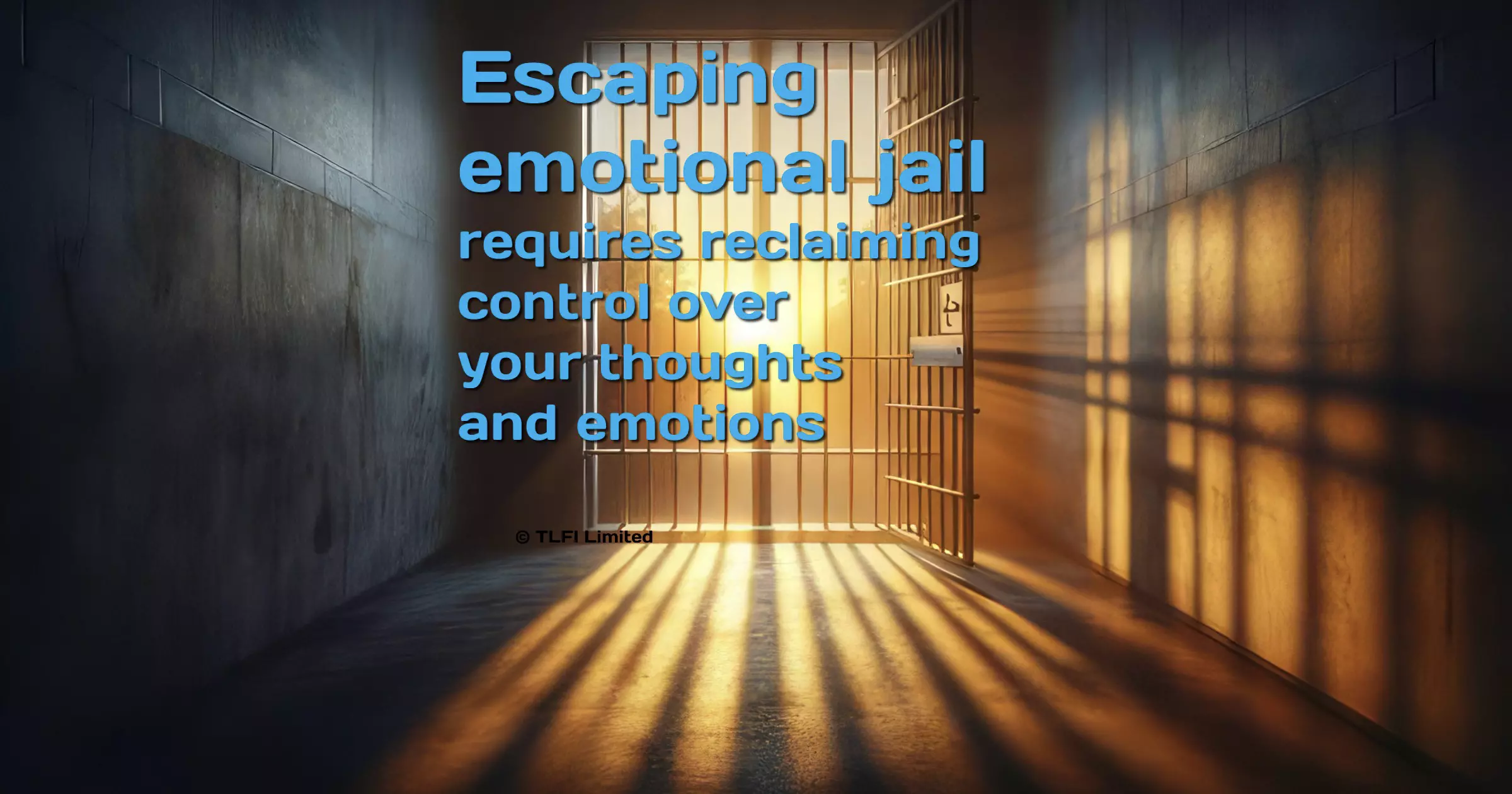
Emotional Jail is a powerful metaphor that encapsulates an entrapment which you may experience, due to the web of self-limiting thoughts and emotions manifesting when you get into a so-called emotional state. When you get deeply emotional, it becomes hard to recognise the barriers built by the passive intellect of the mind. In the throes of an emotional state, the passive intellect orchestrates a relentless parade of self-limiting thoughts and corresponding emotions, constructing an intricate tapestry of limitations and excuses. These thought patterns become the bars of your emotional jail, restricting your ability to think clearly. This metaphorical emotional prison is not only a construct of your mind, but also an energetic state that takes its toll on your mental, physical, and emotional well-being.

Escaping your emotional jail is about how you can learn transformative techniques to break the chain of emotional cause and effect. Thereby giving you an opportunity to break free from this emotional quagmire of your own construction.

The journey to escape the emotional jail is an inner odyssey, requiring commitment to mindful awareness and bringing forward cognitive mastery. As you cultivate these skills, they can help you to become aware of the thoughts and emotions which have formed the prison bars and walls. Being aware is the first step to being able to dismantle the walls of self-imposed limitations, creating an opening for renewed mental and emotional freedom. Escaping your emotional jail, requires reclaiming control over your thoughts and emotions, unlocking the potential for a more liberated, empowered, and balanced existence.

Entering into a state of cognition is an extremely useful key to unlocking your emotional jail. This is not a passive quietening of your mind, but a deliberate and focused effort to silence the cacophony of the thoughts. Cognition involves a dedicated purpose of thought, a specific conscious redirection of mental energy toward constructive, empowering, and liberating perspectives. By quietening the mind with intention, you can create a space for clarity, and the dissolution of the emotional jail’s energetic grip.

♾ Awaken your Mind ♾

Procrastination Affects Your Happiness

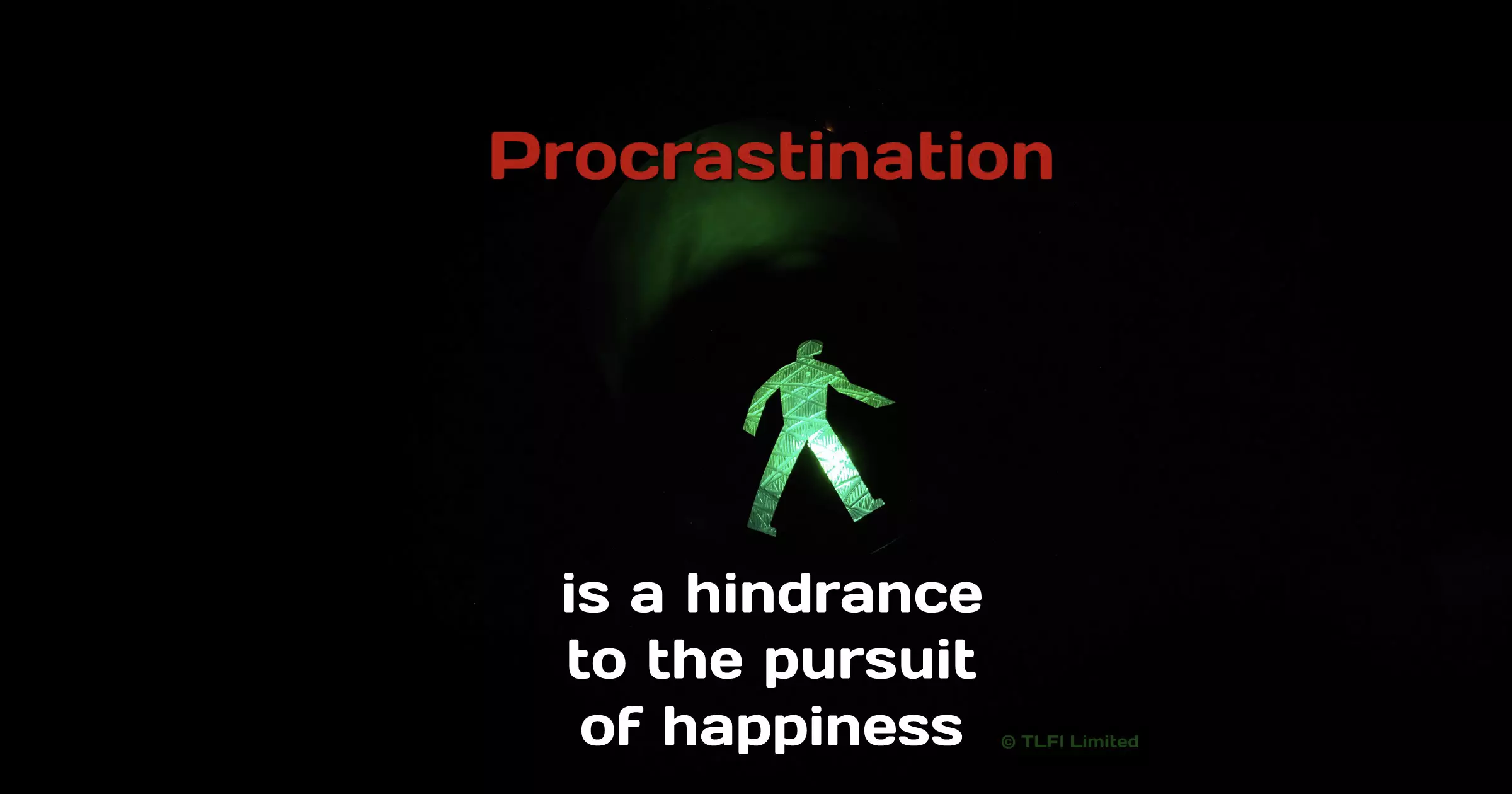
Procrastination, often dismissed as a harmless delay, conceals a significant impact on your well-being and can affect your pursuit of happiness. On the surface, procrastination, or delaying things may seem innocent. However, the crux of the matter is that procrastination, rather than just getting on with things, can often lead to a hidden accumulation of energy, which in some cases can result in increased stress.

It is not uncommon to be faced with tasks which you may deem undesirable. In these situations, the mind naturally gravitates towards avoidance. This avoidance perpetuates delays and adds to the underlying emotional causality. The looming sense of “I don’t want to do this” can very quickly build to be a burden, amplifying the stress associated with the task at hand. This thinking pattern then creates a feedback loop, which not only delays the completion of necessary responsibilities but affects your emotional well-being.

Addressing procrastination requires a proactive approach. By confronting the task head-on, you can liberate yourself from the grip of avoidance, unravelling the knots of stress that hinder your path to happiness. Tackling necessary tasks, not only frees up mental space, but also creates a sense of accomplishment. The release from procrastination allows for a redirection of energy toward more enjoyable aspects of life, fostering a positive cycle where the pursuit of happiness becomes an achievable endeavour.

♾ Awaken your Mind ♾

Are you Awake?

Being fully awake in a metaphysical context entails a heightened awareness of the ongoing processes within your field of consciousness. It involves a mindful recognition of the ebb and flow of thoughts and emotions, empowering you to navigate your mental landscape with clarity and responsiveness.

So instead of unquestioningly succumbing to the whims of your thoughts and emotions, remain vigilant and acknowledge the current state of your mind and emotions before they reach a tipping point, or the proverbial point of no return.

By staying attuned to the nuances of your inner world, you can foster a greater sense of self-awareness and follow through with conscious choices that align with your aspirations.

♾ Awaken your Mind ♾

How Negative Thoughts Affect You

Delving into the intricacies of the human psyche, it becomes evident that negative thoughts or thinking have an impact which extends beyond thoughts themselves. To better comprehend the impact of your thinking, you need to consider the profound connection between your thought patterns, emotions, and the energetic fabric of your being. This may lead you to the realisation that your mind is not only a generator of thoughts, but a sculptor of the energetic landscape that shapes our overall well-being.

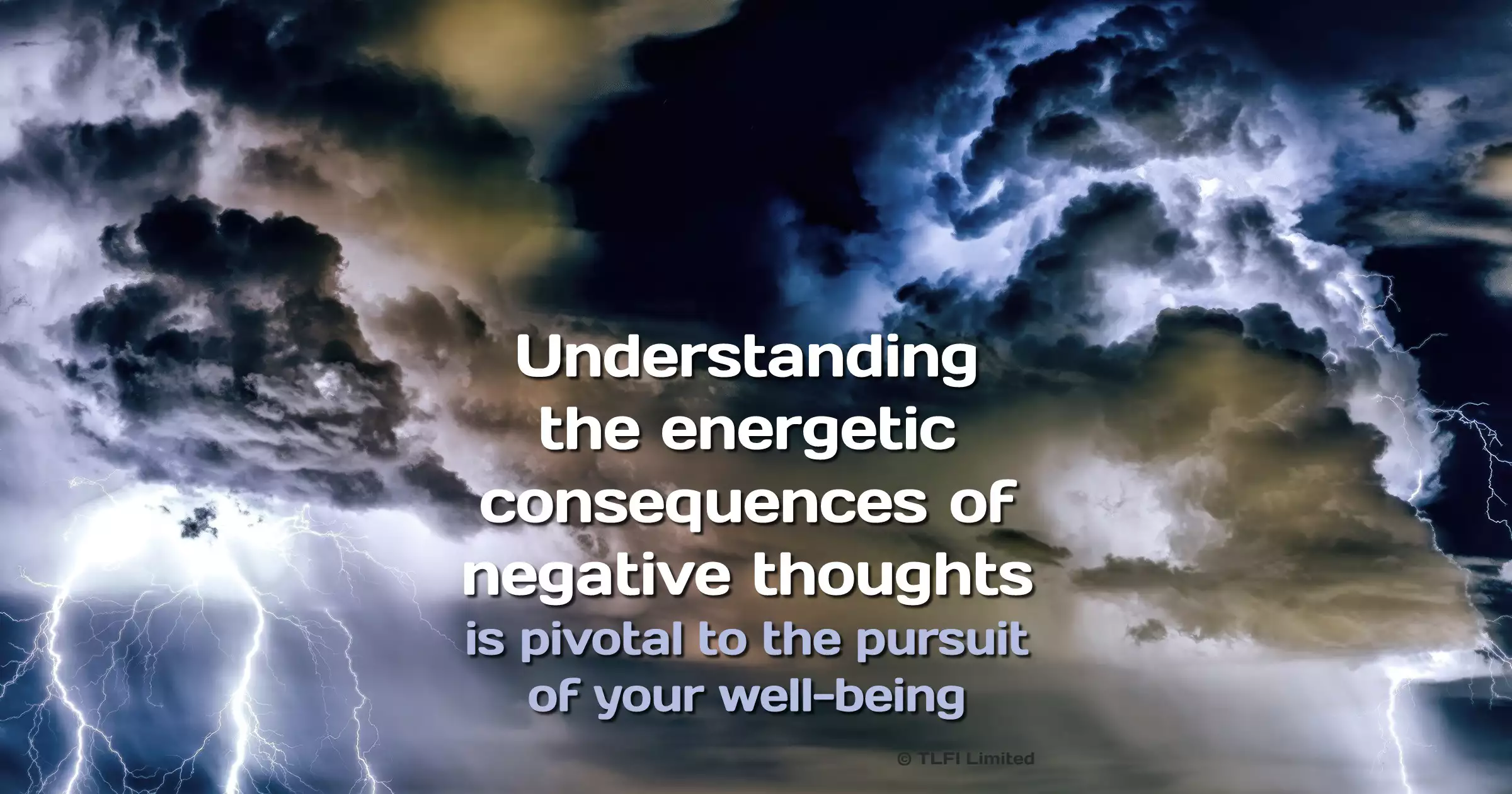
Negative thoughts act like dense clouds, casting deep and long shadows over the mental landscape. If your mind fixates on these destructive aspects, it unwittingly fuels their energetic existence. The energy generated by persistent fear, worry, and destructive emotions can coalesce into a formidable barrier; an energetic interference, akin to static, disrupting the natural flow of the human mechanism.

This energetic disturbance, when left unchecked, becomes a major contributor to both physical ailments and mental imbalances; echoing the profound connection between the mind and the body.

Understanding the energetic consequences of negative thoughts becomes a pivotal point in the pursuit of your well-being. The realisation that your mental states are interlinked with the physical and energetic dimensions of your being can inspire a shift in perspective. By cultivating this awareness, you can redirect the energy of destructive thoughts, or transform their nature through methodologies such as emotional alchemy.

This basic understanding of how negative thoughts can affect you, gives the insight to break the cycle of negative thought patterns, promoting mental clarity and emotional resilience.

♾ Awaken your Mind ♾

Your World in Your Mind

The perception of the world around you is greatly influenced by the state of your mind as you experience the world through your mind. These perceptions are not mere reflections of the outside world, but are powerful filters on life. The lens through which you view the world is shaped by the state of your own consciousness.

This symbiotic relationship between internal states and external experiences highlights the pivotal role of perception in shaping our interpretation of reality. This important fact acknowledges that your inner landscape, teeming with thoughts, emotions, and feelings acts as the master painter, imparting hues and tones to the canvas of your reality.

Once you become more aware that your mind colours your perceptions of the world around you, you can begin to appreciate how these perceptions can be altered. If your mind is clouded with negative or despondent thoughts, the world may be manifest in a gloomy hue. Conversely, when your mind is filled with happiness, the world will take on a similar positive outlook.

By understanding the profound impact your mind can have in your life, you can take the opportunity to alter or recolour your perceptions. You are capable of changing the ordinary into the extraordinary and shaping a world that resonates with the vibrancy of your innermost thoughts and emotions.

♾ Awaken your Mind ♾